

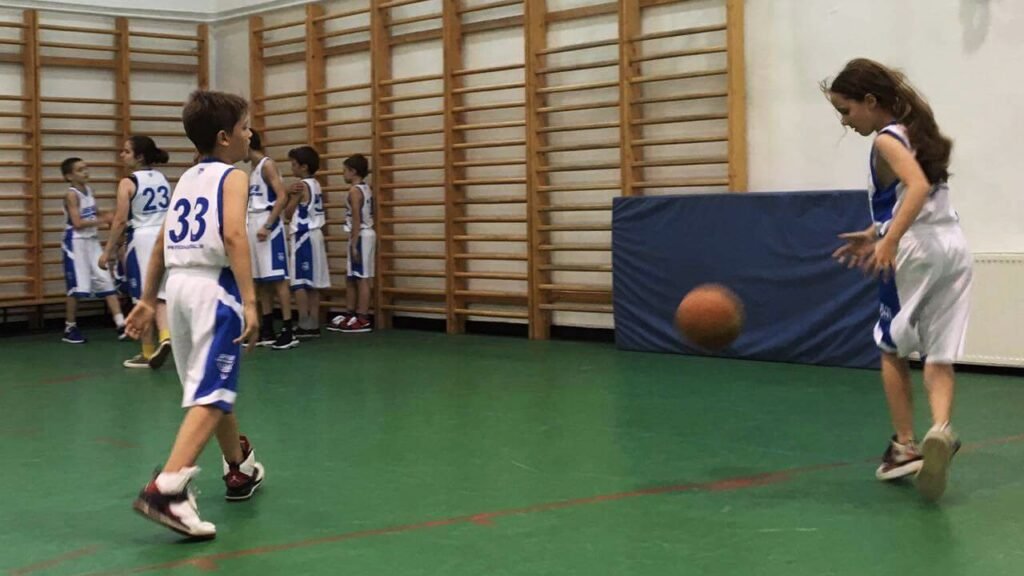
Why shy kids benefit from joining a team
Joining a team sport like basketball can help shy children develop social skills, confidence, and a sense of belonging. Being part of a small, supportive team turns practice into a welcoming community rather than a single spotlight moment.
Active participation supports overall well-being and physical fitness. According to the CDC, regular physical activity helps kids build stronger bones and muscles, improve mood, and develop social skills. Learn more about guidelines for children’s activity. You can also explore tips from HealthyChildren.org and start a gentle, enjoyable journey.
Simple, low-pressure basketball activities to try
- Ball-handling games – Easy dribbling with one hand, then the other, on a safe, flat court to boost coordination without pressure.
- Partner passing and catching – Two players pass back and forth close to each other, focusing on successful catches rather than scoring.
- Cooperative drills – Small groups work together to complete a sequence (dribble, pass, pass). No competitive scoring; celebrate teamwork.
- 3-on-3 mini-games – Short, friendly games on a smaller court to reduce intensity and increase touch time with teammates.
- Role-play scenarios – Practice on-court communication: calling for the ball, thanking teammates, and encouraging peers. Tip: keep language positive and inclusive.
Getting started with confidence
- Talk with the coach about your child’s comfort level and goals before the first session.
- Arrange a pre-visit to the gym or practice space so your child sees the environment without pressure.
- Pair your child with a welcoming buddy or mentor on the team to help them feel included.
- Set small, achievable goals for each practice (e.g., “dribble for 30 seconds without looking away”).
- Celebrate progress with praise that focuses on effort and participation.
Tips for parents and coaches
- Model positive language and avoid criticizing mistakes in front of teammates.
- Provide predictable routines (arrival time, warm-up, and practice length) to reduce anxiety.
- Encourage peer support—invite teammates to acknowledge small successes.
- Communicate with the player’s comfort level and adjust drills accordingly.
- Coordinate with the coach to track progress and adjust goals over time.
“Patience and praise can transform shy children into confident team players.”
Safety and inclusivity in youth basketball
Ensure all activities use proper gear and equipment. Surface safety, hydration, and rest breaks matter for young players. For safety guidelines on children’s sports, see the CDC resource linked above.
For age-appropriate equipment and practices, consult official sources and your local league guidelines. For more on youth sports development, visit USA Basketball or your national basketball federation’s resources.