

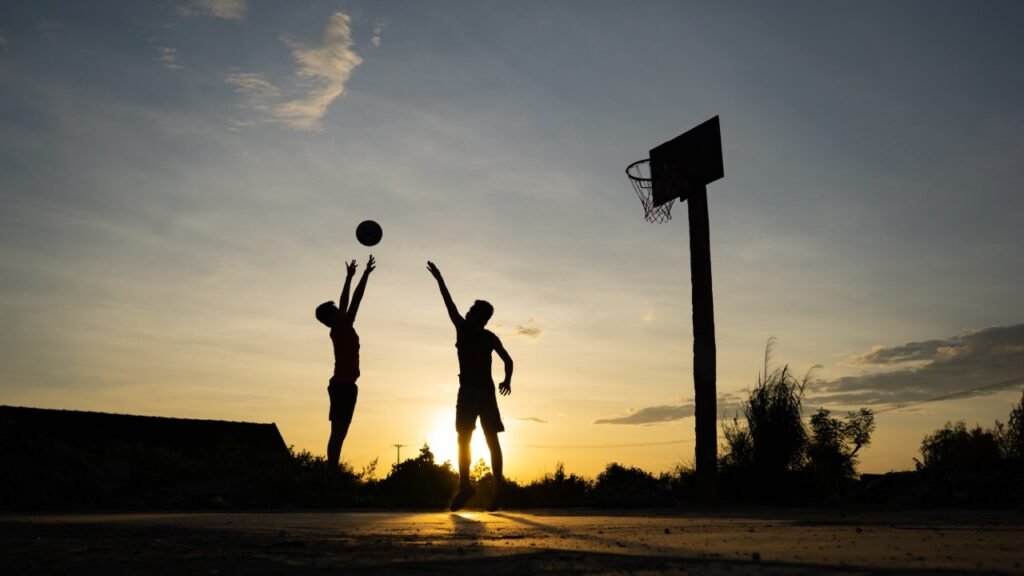
Learning basketball positions helps kids understand roles on the court and how teamwork makes plays work. This kid-friendly guide explains each position, what it does, and how parents can help their children build skills and confidence. The terms used below are explained simply, and you’ll find links to official sources for broader context.
The five basketball positions
Point Guard (PG)
The point guard is often the team’s primary ball handler and decision maker. Think of the PG as the on-court coach who sets up plays and helps teammates get into good scoring positions.
- Primary role: bring the ball up the court, run offensive sets, and create passing opportunities.
- Key skills for kids to develop: ball handling, quick, accurate passes, and reading the defense.
- Child-friendly analogy: “the driver on a road trip” who guides everyone to the right destination.
Shooting Guard (SG)
The shooting guard is usually a strong scorer who can shoot from distance and finish plays around the rim. SGs help balance the offense with reliable shooting and scoring threats.
- Primary role: score points, create off-ball movement, and sometimes handle the ball when the PG rests.
- Key skills for kids to develop: shooting form, catching and shooting, and finishing at the rim.
- Child-friendly analogy: “the reliable scorer who can find open teammates.”
Small Forward (SF)
The small forward is versatile, often contributing in scoring, defense, and rebounding. SFs need a well-rounded skill set and good basketball sense.
- Primary role: score, guard multiple positions, and help on defense.
- Key skills for kids to develop: agility, decision-making, and applying pressure on the ball.
- Child-friendly analogy: “the all-around helper who does a bit of everything.”
Power Forward (PF)
The power forward often plays closer to the basket, using strength and positioning to grab rebounds and create second-chance opportunities.
- Primary role: rebound, set solid screens, and work inside the paint.
- Key skills for kids to develop: footwork, strength in the lower body, and finishing near the basket.
- Child-friendly analogy: “the next-door neighbor who pounds the boards for extra chances.”
Center (C)
The center is typically the tallest player who anchors the defense and protects the rim. C players focus on shot-blocking, rebounding, and inside scoring.
- Primary role: protect the paint, rebound, and finish around the rim.
- Key skills for kids to develop: positioning, blocking technique, and strong finishing near the hoop.
- Child-friendly analogy: “the last line of defense and the big target near the basket.”
Practical tips for parents
- Keep explanations simple and concrete. Use kid-friendly metaphors like drivers, builders, or protectors.
- Let kids try multiple positions during practice rotations to build overall skills and confidence.
- Emphasize fundamental basics first: dribbling, passing, shooting form, and defense stance.
- Avoid early specialization. Encourage a well-rounded game so kids enjoy every part of basketball.
- Use positive language and short practice sessions to maintain focus and enthusiasm.
Home practice ideas for families
- Dribble drill: 2 minutes with each hand, then a cross-over while keeping eyes up.
- Pass-and-cut drill: stand 6–8 feet apart, pass, cut to the basket, and receive a return pass.
- Shoot from short range: practice making a set number of shots from close to the basket, then gradually move back.
- Defensive stance drill: practice defensive stance for 30 seconds, then shuffle left and right.
- Mini “position of the day” idea: pick one position to focus on for a week, then switch.
Quick reference: positions, roles, and skills
| Position | Primary Role | Key Skills to Develop | Youth Focus |
|---|---|---|---|
| Point Guard (PG) | Ball handling and playmaking | Dribbling, passing, court vision | Team decision-making and leadership |
| Shooting Guard (SG) | Scoring and shooting | Shooting form, off-ball movement | Reliable scoring threat |
| Small Forward (SF) | All-around contributor | Agility, defense, decision-making | Versatility and basketball sense |
| Power Forward (PF) | Inside presence and boards | Footwork, finishing near the rim | Strength and positional play |
| Center (C) | Rim protection and rebounds | Blocking technique, outlet passing | Positioning and finishing at the rim |
Official sources and further reading
For broader context on basketball rules and positions, you can visit official resources such as the NBA and FIBA websites.
Encouraging curiosity and teamwork
Encourage your child to explore all five positions in practice and games, focus on fun, safety, and learning, and celebrate improvements. A well-rounded kid enjoys basketball more and builds lasting confidence.