

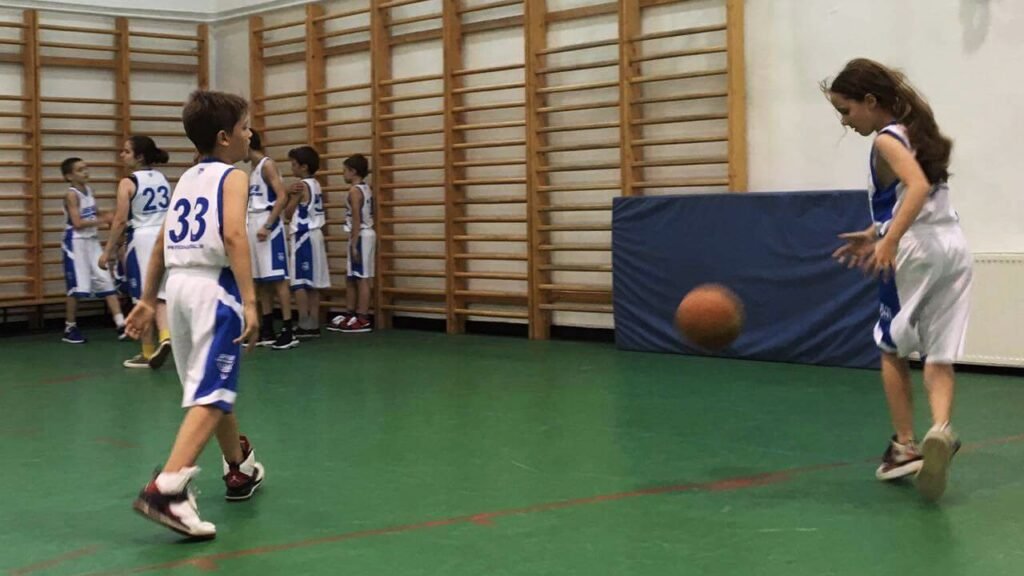
Why small-space dribbling matters
Dribbling in tight spaces helps kids keep the ball safe, move with purpose, and avoid turnovers during crowded possessions. Practicing in a small area also builds confidence, improves hand–eye coordination, and makes on-court decision-making faster. For parents, short, focused practice sessions at home can translate to calmer, more controlled play during games.
Common mistakes families make when teaching small-space dribbling
- Over-coaching or shouting disrupts natural experimentation and can scare kids away from trying new moves.
- Expecting perfect technique right away—break skills into tiny steps and celebrate small wins.
- Neglecting proper stance and posture— knees bent, back tall, eyes up, and the ball kept under control.
- Ignoring ball security and shielding— teach how to use the body to protect the ball from defenders.
- Using the wrong ball size or grip— a ball that’s too large or too slippery makes dribbling harder. When in doubt, refer to age-appropriate equipment guidelines from official sources such as FIBA or USA Basketball.
At-home drills you can do in a small space
- Stationary dribbles: bounce the ball to knee height or lower and switch hands after 30 seconds.
- Dribble and pivot: practice quick pivots in place while keeping the dribble alive—focus on small, controlled steps.
- Figure-eight dribble: loop the ball around two small markers (or cushions) in a tight pattern to improve control and change of direction.
- Shield-and-pass drill: stand tall, use your body as a shield, and make a short pass to a target while keeping the ball protected.
- Two-ball dribbling (advanced): if space allows, alternate between two balls to build touch and coordination.
Parent tip: Turn practice into a quick game with clear, attainable goals. Celebrate each small improvement to keep kids engaged and motivated.
Glossary
- Dribbling — bouncing the ball on the floor while moving to advance and maintain possession.
- Low dribble — keeping the ball at or below knee height for better control in tight spaces.
- Shielding — using the body to protect the ball from a defender.
- Pivot — turning on one foot to change direction without traveling.
- Space-awareness — recognizing where to move, when to slow down, and how to protect the ball in crowded areas.
Helpful resources
For official basketball fundamentals and safety guidelines, visit FIBA and CDC.
Frequently asked questions
Q: How long should a small-space dribbling practice last for a child? A: Start with 10–15 minutes, 2–3 times a week, and gradually increase as interest and skill grow.